I saw a Strava post today that showed a young friend - who flew in from the mainland yesterday - was out running today. She was stoked that she made it back 'home' one day before the 14 day mandatory quarantine order was officially set to kick in (today). She's probably healthy and fine, but what if she isn't? What if she's one of those young healthy people who have no symptoms but she's actually a carrier and ends up passing the virus along to our local community without knowing it? Is it any of my business anyway? Arguments could go both ways on that, I think. These are the things I am contemplating these days. I definitely see a generational divide of sorts taking place. I'm hard pressed to place a ton of blame/pressure on younger people, bc if I'm honest, when I was in my 20s I very well might have conducted myself the exact same way. I view things differently now.
Being a triathlon coach right now is an interesting challenge. I'm grateful that so many of my athletes have stuck with me to weather out this storm. A few weeks ago I was ripping my hair out, modifying everyone's schedules every day as we learned about another race cancelled or postponed... Text after text would come through.. "My pool is closed." "My race is cancelled." Things seem to be a bit more settled now, because pretty much everything is closed and cancelled/postponed. The reality is that no one has a race coming up any time soon. Very few have access to a pool. Some have access to ocean, but conditions right now are complete shit with high wind advisories and man-o-war blanketing the east side of Oahu. Shoot, there was even a shark right here in Kailua last weekend, cruising just a few meters from shore. Seems like the universe is shouting STOP SWIMMING. Some will still find a way to swim, even if they have to be tethered to a step ladder to get it done.
So there are lots of obstacles right now. But here's the thing- Goals Don't Change. Timelines change, yes, but goals are goals and people who are driven will find a way to work around obstacles. In fact, for some, obstacles present unique opportunities to conquer. I have some ideas flowing that I think will help keep athletes motivated and in the game these next few months. Driven Type A competitive athletes don't just shut down because things are hard. More on this to come very soon.
Personally, I'm still training every day. Mostly riding my trainer, but I'm running too and will find a way to swim again soon too. It's funny. After Kona last fall, my drive to RACE again was really really (really) low. I do love training though, and I told myself that even if I never raced again, I'd train every day just because I like training. It's interesting that I'm being tested on that right now... but ya, even with no races in site, I train every day and still push myself and still go after goals for the fun of it. Like truly, only for the sense of personal accomplishment.
I'm currently on a bit of a bike streak. I actually went back and counted how many days this year (2020) that I had not ridden my bike. You know how many days I haven't ridden? Let's just say that I can count them on two hands. Biking is a very blue collar sport, meaning the more you do it, the better you get at it. So ya we can debate training philosophies and strategies and which session elicits the most benefit for which piece of physiology... but at the end of the day (or year), more is more when it comes to riding. Ride easy. Ride hard. Ride frequently. Ride long. Push big gears. Ride uphill. Learn to descend. Learn to draft. Practice surging. Analyze it some, yes, but not too much. Ride more. That's how you get stronger on the bike. I'm feeling it again too. The last few years I have just watched my cycling become more and more mediocre. That just ATE AT ME because I knew that I still had it in me to be a good rider. So I don't know if I'll get a chance to race this year or not, but I'll keep riding almost every day because I like the way it makes me feel and I like that I'm currently fit/strong enough to ride the way I want to ride. Ten days ago I posted this on Strava. Still stand by it.
Thursday, March 26, 2020
Wednesday, March 25, 2020
I Have THOUGHTS
Quarantine makes me think about a lot of things. My brain has been running 100mph these last few weeks.
I should clarify. We're not really in "quarantine". Its more that we are adhering pretty strictly to the Shelter in Place order that has been issued by our Mayor and then our Governor. Those orders didn't change much for us when they were issued. I had made a decision for our family 3-4 days prior that we were going to limit our exposure to society for a while.
I'm going to insert a note here to just say how grateful I am that my husband is such a good man. I started reading about this virus a while back- before it was headline news every second- and I read that it attacks lung tissue and is worse for people with pre-existing conditions. That freaked me out personally pretty hard. If I'm honest I'd admit that I have a fear that if I get it, I'd be one of those people in the ICU requiring a ventilator. At first that sort of sounded ridiculous but then once the virus started spreading more and more and we started hearing about people in their 40s on life support, well, I felt less ridiculous for having my earlier fears. It's pretty easy for me to contain myself here at home. I was relieved when school was out for spring break because that meant Moana wasn't out and about potentially becoming a carrier. But then all I could think was that my husband was potentially the biggest threat to me because he was still going to work every day. Even though his office is small and he was being careful, it just didn't seem like the risk was worth it given how the virus was spreading. Once it was confirmed that there were cases of Covid 19 right here in our town, all I had to say to my husband was that I was scared and I needed him to find a way to work from home and that was it. He made it happen the next day. #grateful
So with my personal safety currently pretty well assured, I feel like I can be a fairly objective observer of the situation as a whole. In a big picture sense, this whole thing is like a real life version of Survival of the Fittest. I don't see it as a contest, necessarily, because it isn't us against each other. It's us against the virus, physically. It's us against ourselves, emotionally. People who are the most physically fit will manage to survive the virus if they get it. People who are the most emotionally/intellectually ready to adapt will survive this temporary Physical Distancing thing. Businesses that were set up with safety nets in place will survive, too. I suspect though that we'll never go back to exactly the way things were before, but that doesn't mean we'll never get back to 'good'.
In the meantime, we have a lot of adapting to do. Adapt the way we interact and connect with each other. Adapt the way we train/race. Adapt our business models. I think people who resist the change are going to have a harder time than people who can objectively see the current world for what it is and still find a way to thrive in it. For me this week it meant figuring out how to use Zoom. Spoiler alert- it was super easy. But with Zoom I could see/talk/connect with my athletes from all over. It felt good to do that. We'll keep doing that! Positive change. I suspect there will be a lot more of this kind of thing in the coming months. Adapt.
One last note for today... I can see how people who live alone would potentially have a WAY harder time with the Physical Distancing than families. And potentially, if someone in your household isn't capable of adapting very well, I can see how being cooped up with someone who in angry would be a very serious problem. I am *extremely* grateful for my family right now, and interestingly enough, I think this extensive time spent together (with no alternatives!) has been really really good for us. We talk more. We play more. We get along and genuinely enjoy each other's company. For sure that shapes my outlook on this whole situation.
Anyway, I have a lot more thoughts and intend to share them, ideally daily going forward for a while. I'll tackle some triathlon training topics tomorrow.
I should clarify. We're not really in "quarantine". Its more that we are adhering pretty strictly to the Shelter in Place order that has been issued by our Mayor and then our Governor. Those orders didn't change much for us when they were issued. I had made a decision for our family 3-4 days prior that we were going to limit our exposure to society for a while.
I'm going to insert a note here to just say how grateful I am that my husband is such a good man. I started reading about this virus a while back- before it was headline news every second- and I read that it attacks lung tissue and is worse for people with pre-existing conditions. That freaked me out personally pretty hard. If I'm honest I'd admit that I have a fear that if I get it, I'd be one of those people in the ICU requiring a ventilator. At first that sort of sounded ridiculous but then once the virus started spreading more and more and we started hearing about people in their 40s on life support, well, I felt less ridiculous for having my earlier fears. It's pretty easy for me to contain myself here at home. I was relieved when school was out for spring break because that meant Moana wasn't out and about potentially becoming a carrier. But then all I could think was that my husband was potentially the biggest threat to me because he was still going to work every day. Even though his office is small and he was being careful, it just didn't seem like the risk was worth it given how the virus was spreading. Once it was confirmed that there were cases of Covid 19 right here in our town, all I had to say to my husband was that I was scared and I needed him to find a way to work from home and that was it. He made it happen the next day. #grateful
So with my personal safety currently pretty well assured, I feel like I can be a fairly objective observer of the situation as a whole. In a big picture sense, this whole thing is like a real life version of Survival of the Fittest. I don't see it as a contest, necessarily, because it isn't us against each other. It's us against the virus, physically. It's us against ourselves, emotionally. People who are the most physically fit will manage to survive the virus if they get it. People who are the most emotionally/intellectually ready to adapt will survive this temporary Physical Distancing thing. Businesses that were set up with safety nets in place will survive, too. I suspect though that we'll never go back to exactly the way things were before, but that doesn't mean we'll never get back to 'good'.
In the meantime, we have a lot of adapting to do. Adapt the way we interact and connect with each other. Adapt the way we train/race. Adapt our business models. I think people who resist the change are going to have a harder time than people who can objectively see the current world for what it is and still find a way to thrive in it. For me this week it meant figuring out how to use Zoom. Spoiler alert- it was super easy. But with Zoom I could see/talk/connect with my athletes from all over. It felt good to do that. We'll keep doing that! Positive change. I suspect there will be a lot more of this kind of thing in the coming months. Adapt.
One last note for today... I can see how people who live alone would potentially have a WAY harder time with the Physical Distancing than families. And potentially, if someone in your household isn't capable of adapting very well, I can see how being cooped up with someone who in angry would be a very serious problem. I am *extremely* grateful for my family right now, and interestingly enough, I think this extensive time spent together (with no alternatives!) has been really really good for us. We talk more. We play more. We get along and genuinely enjoy each other's company. For sure that shapes my outlook on this whole situation.
Anyway, I have a lot more thoughts and intend to share them, ideally daily going forward for a while. I'll tackle some triathlon training topics tomorrow.
Thursday, August 8, 2019
On Being Tired vs Being Depleted...
Oh hey! My computer remembered my log in and password for this blog. Woot!
Obviously I haven't written in a while, but that doesn't mean I haven't been thinking and learning and experimenting and assessing all things triathlon like I used to do. Writing out my thoughts feels more foreign now since I'm out of the habit, but maybe writing is like riding a bike? Let's see...
I feel like I'm starting to crack a code of sorts when it comes to long distance endurance performance in heat... Though sometimes FB memories come up and remind me that I've said before that I thought I had my cramping problem solved... but then it appears maybe its a moving target b/c as soon as I think that I've figured it out, I do a race and find out that actually, nope. Is this time different? I don't know. Maybe?
I've raced 2x 70.3s this year (Honu and Ohio). I thought I had a solid plan going into Honu, but it didn't work. In short, I started feeling twinges of cramping before even reaching half way on the bike (WTF??) so I soft pedaled in then thought maybe I'd be ok on the run but legs completely seized up on me (pick a muscle in either leg- it wasn't functioning) and the last 4ish miles of that run were some of the most painful hobbling I've ever done. It felt like another massive failure. Though I'll say that there was something different about that 'failure'... This time I knew 100% for sure that it was some kind of chemical imbalance in my body that was causing muscles to not function. It felt less personal, if that makes sense... Like, I 'failed' that race but not because I am a failure. It just became crystal clear to me that what works for other athletes (as far as fueling/hydration) doesn't work for me. I needed to figure out my own formula and nobody was going to do that for me. I knew my problem revolved more around hydration than anything else. It's not like I don't train for these things! My problem during Honu wasn't simple exhaustion from a long hard race effort. It was more like my body was depleted and that got me thinking about the difference between being fatigued vs being depleted.
I sort of lucked into a Kona spot at Honu, which in a way I was stoked about but in another way I was completely freaked out about. Like, can I keep enough fluids in my body to safely complete that distance anymore? I mean, not if I managed things the way I did at Honu. I needed a new plan for sure if I was going to attempt to double the distance in those same sweltering conditions. I felt desperate. I thought I'd taken 'a lot' of sodium at Honu. But what is 'a lot'? Is 300mg a lot? 500? 1000? I needed to define some things to get to the bottom of this puzzle.
I finally caved and did a basic (remote) sweat test via a company called Levelen. For a long time I'd suspected that my sweat was pretty concentrated, but what does that even mean? It means I horrify any good bike mechanic because all my bike parts corrode quicker than most people's bike parts, to start... But having some numbers/facts/data helps put things in perspective. To make a long story short, test results showed that I lose ~1250mg/sodium per liter of sweat when I run (~850/liter on the bike- not sure why that's different concentration?) and I lose ~2.3 liters/hour when jogging easy in not crazy hot conditions. So when you do the math on that, it works out to ~2900mg sodium/hour when I'm running.
Looking at those numbers, some things seemed impossible. Like, there has to be an upper limit on the amount of fluids one can absorb each hour. I think I've trained myself over the years to absorb more than many... But not that much?? Is there an upper limit to sodium intake then? Daily recommendation is 2300mg but if I lose more than that in an hour, what's my personal limit for an 11ish hour race? What are the negative effects of taking too much sodium? I genuinely didn't know, but I started experimenting. 6000mg sodium before/during a 4 hour training ride seemed to work well and I had no ill effects from that...
I went into Ohio 70.3 with an enhanced plan to take in even more sodium and my thought was that if I 'failed' that race because I took in too much, I'd be ok with that. I won't bore you with the details of a play by play of how the race unfolded, but the gist of it is this:
I started out the first 90min or so managing things pretty much exactly like how I managed things at Honu... Skratch Hyper before the race then after an average swim effort, onto the bike drinking standard Nuun/Skratch and eating bars and Skratch chews, as many triathletes do. About 20 miles into that ride I felt the same twinge of a cramp in my adductor that I did at Honu and the frustration started to mount. AGAIN??? But this time I had some options where I could experiment... A bottle of "The Right Stuff" on my bike (1780mg sodium) saved my ride. I started drinking that and within ~10 miles I had full function of my legs again and was able to push the way I wanted to push. So I finished that ride way stronger than I finished the Honu ride.
Another change I made was to take Gatorade at the aid stations vs water. I think many of us have been taught that Gatorade is the devil and to avoid it at all costs... at Honu I avoided Gatorade and took water instead, but once I found out the concentration of my sweat I decided that Gatorade- while maybe not perfect- is a better solution for me than plain water. In the end I calculated sodium intake on the bike to be ~3000mg. And while I felt some normal fatigue getting off that bike, I didn't feel like I was depleted.
In T2 I'd placed a little cooler for myself with another bottle of The Right Stuff. I sipped on that over the first mile or so and legs seemed to be working reasonably well for the first 5 miles or so. I was stoked! Then around mile 6 I started feeling those familiar twinges again... Let's try more sodium to see if that was my answer? I had another ~2000mg sodium in my pockets in the form of Liquid IV powder in a flask (500mg) and then 2x Precision Hydration tabs (750mg each). I started with the Liquid IV flask- next aid station I added water to my flask which made a pretty concentrated solution, but I was also taking water with it so I sipped on that solution while drinking water and that seemed to bring my legs back around for a few miles. Then more twinges so ok lets try these Precision Hydration tabs... They say nothing new on race day but I knew if I did the same thing as I'd always done I'd be crawling to the finish line so I was willing to risk trying something new. Anyone ever chewed a Precision Hydration tab? Pro tip- only attempt that in small bites and only at an aid station where you can wash it down with water. Those things are effervescent and they burn your mouth if you just try to eat them. But, they're a lightweight way to carry concentrated sodium source so I'm all about those tabs now.
Anyway, I found it interesting how those seemed to be helping my muscles function... but only very temporarily. But really, if I do the math on it, if I'm losing 2900mg sodium/ hour and these 70.3 runs are taking me 2ish hours, I'm losing in the neighborhood of 5800 mg total just during the run... so even if I was fully topped off to start, the 3500ish mg that I took in during the run (which seemed like A LOT) still wasn't quite enough. I felt it too in the last 2 miles legs were going going gone and it got ugly there toward the end... but I made it further than I did at Honu for sure and felt stoked like I'm on the right path here solving my problem. I know people say that hydration and electrolyte losses aren't the cause of cramping, but my experiences prove to me that at least in my personal case, there is absolutely a correlation. And now that I have some concrete numbers to work with, I can keep experimenting over the next few months and see if I can't figure out a plan that might work to allow me to finish Kona without crawling. #goals
Anyway, I've started trying to trouble shoot with a few of my athletes who seem to have similar cramping problems, and the increased sodium on their key days seems to be helping them. We look at it in terms of fatigue vs depletion... when you're tired, is it because fitness isn't high enough to support your current effort? (Fatigue) Or is it because you haven't given your body the hydration/fuel/electrolytes to keep it functioning at its best? (Depletion). I feel like for the longest time I blamed all my cramping problems on fitness... so the solution was TRAIN MORE! But I'm rethinking that now and trying my best to avoid depletion as much as I can (which for some of us who live and train in high heat scenarios year round is way harder than we wish it was!)
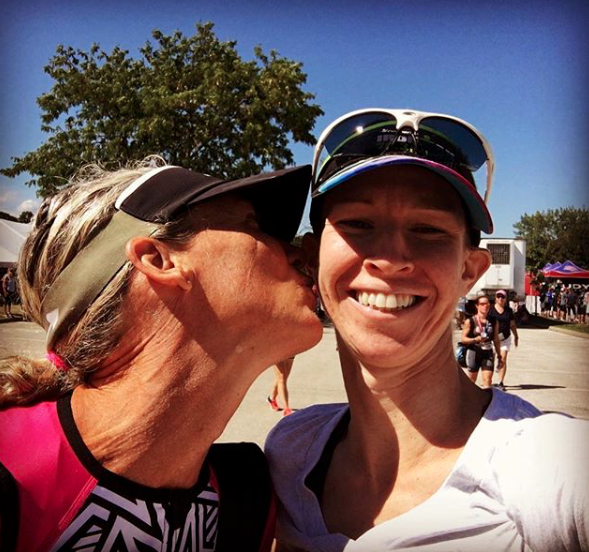
This is the face of an athlete who feels like she's finally managed to start to solve a very frustrating puzzle...
Obviously I haven't written in a while, but that doesn't mean I haven't been thinking and learning and experimenting and assessing all things triathlon like I used to do. Writing out my thoughts feels more foreign now since I'm out of the habit, but maybe writing is like riding a bike? Let's see...
I feel like I'm starting to crack a code of sorts when it comes to long distance endurance performance in heat... Though sometimes FB memories come up and remind me that I've said before that I thought I had my cramping problem solved... but then it appears maybe its a moving target b/c as soon as I think that I've figured it out, I do a race and find out that actually, nope. Is this time different? I don't know. Maybe?
I've raced 2x 70.3s this year (Honu and Ohio). I thought I had a solid plan going into Honu, but it didn't work. In short, I started feeling twinges of cramping before even reaching half way on the bike (WTF??) so I soft pedaled in then thought maybe I'd be ok on the run but legs completely seized up on me (pick a muscle in either leg- it wasn't functioning) and the last 4ish miles of that run were some of the most painful hobbling I've ever done. It felt like another massive failure. Though I'll say that there was something different about that 'failure'... This time I knew 100% for sure that it was some kind of chemical imbalance in my body that was causing muscles to not function. It felt less personal, if that makes sense... Like, I 'failed' that race but not because I am a failure. It just became crystal clear to me that what works for other athletes (as far as fueling/hydration) doesn't work for me. I needed to figure out my own formula and nobody was going to do that for me. I knew my problem revolved more around hydration than anything else. It's not like I don't train for these things! My problem during Honu wasn't simple exhaustion from a long hard race effort. It was more like my body was depleted and that got me thinking about the difference between being fatigued vs being depleted.
I sort of lucked into a Kona spot at Honu, which in a way I was stoked about but in another way I was completely freaked out about. Like, can I keep enough fluids in my body to safely complete that distance anymore? I mean, not if I managed things the way I did at Honu. I needed a new plan for sure if I was going to attempt to double the distance in those same sweltering conditions. I felt desperate. I thought I'd taken 'a lot' of sodium at Honu. But what is 'a lot'? Is 300mg a lot? 500? 1000? I needed to define some things to get to the bottom of this puzzle.
I finally caved and did a basic (remote) sweat test via a company called Levelen. For a long time I'd suspected that my sweat was pretty concentrated, but what does that even mean? It means I horrify any good bike mechanic because all my bike parts corrode quicker than most people's bike parts, to start... But having some numbers/facts/data helps put things in perspective. To make a long story short, test results showed that I lose ~1250mg/sodium per liter of sweat when I run (~850/liter on the bike- not sure why that's different concentration?) and I lose ~2.3 liters/hour when jogging easy in not crazy hot conditions. So when you do the math on that, it works out to ~2900mg sodium/hour when I'm running.
Looking at those numbers, some things seemed impossible. Like, there has to be an upper limit on the amount of fluids one can absorb each hour. I think I've trained myself over the years to absorb more than many... But not that much?? Is there an upper limit to sodium intake then? Daily recommendation is 2300mg but if I lose more than that in an hour, what's my personal limit for an 11ish hour race? What are the negative effects of taking too much sodium? I genuinely didn't know, but I started experimenting. 6000mg sodium before/during a 4 hour training ride seemed to work well and I had no ill effects from that...
I went into Ohio 70.3 with an enhanced plan to take in even more sodium and my thought was that if I 'failed' that race because I took in too much, I'd be ok with that. I won't bore you with the details of a play by play of how the race unfolded, but the gist of it is this:
I started out the first 90min or so managing things pretty much exactly like how I managed things at Honu... Skratch Hyper before the race then after an average swim effort, onto the bike drinking standard Nuun/Skratch and eating bars and Skratch chews, as many triathletes do. About 20 miles into that ride I felt the same twinge of a cramp in my adductor that I did at Honu and the frustration started to mount. AGAIN??? But this time I had some options where I could experiment... A bottle of "The Right Stuff" on my bike (1780mg sodium) saved my ride. I started drinking that and within ~10 miles I had full function of my legs again and was able to push the way I wanted to push. So I finished that ride way stronger than I finished the Honu ride.
Another change I made was to take Gatorade at the aid stations vs water. I think many of us have been taught that Gatorade is the devil and to avoid it at all costs... at Honu I avoided Gatorade and took water instead, but once I found out the concentration of my sweat I decided that Gatorade- while maybe not perfect- is a better solution for me than plain water. In the end I calculated sodium intake on the bike to be ~3000mg. And while I felt some normal fatigue getting off that bike, I didn't feel like I was depleted.
In T2 I'd placed a little cooler for myself with another bottle of The Right Stuff. I sipped on that over the first mile or so and legs seemed to be working reasonably well for the first 5 miles or so. I was stoked! Then around mile 6 I started feeling those familiar twinges again... Let's try more sodium to see if that was my answer? I had another ~2000mg sodium in my pockets in the form of Liquid IV powder in a flask (500mg) and then 2x Precision Hydration tabs (750mg each). I started with the Liquid IV flask- next aid station I added water to my flask which made a pretty concentrated solution, but I was also taking water with it so I sipped on that solution while drinking water and that seemed to bring my legs back around for a few miles. Then more twinges so ok lets try these Precision Hydration tabs... They say nothing new on race day but I knew if I did the same thing as I'd always done I'd be crawling to the finish line so I was willing to risk trying something new. Anyone ever chewed a Precision Hydration tab? Pro tip- only attempt that in small bites and only at an aid station where you can wash it down with water. Those things are effervescent and they burn your mouth if you just try to eat them. But, they're a lightweight way to carry concentrated sodium source so I'm all about those tabs now.
Anyway, I found it interesting how those seemed to be helping my muscles function... but only very temporarily. But really, if I do the math on it, if I'm losing 2900mg sodium/ hour and these 70.3 runs are taking me 2ish hours, I'm losing in the neighborhood of 5800 mg total just during the run... so even if I was fully topped off to start, the 3500ish mg that I took in during the run (which seemed like A LOT) still wasn't quite enough. I felt it too in the last 2 miles legs were going going gone and it got ugly there toward the end... but I made it further than I did at Honu for sure and felt stoked like I'm on the right path here solving my problem. I know people say that hydration and electrolyte losses aren't the cause of cramping, but my experiences prove to me that at least in my personal case, there is absolutely a correlation. And now that I have some concrete numbers to work with, I can keep experimenting over the next few months and see if I can't figure out a plan that might work to allow me to finish Kona without crawling. #goals
Anyway, I've started trying to trouble shoot with a few of my athletes who seem to have similar cramping problems, and the increased sodium on their key days seems to be helping them. We look at it in terms of fatigue vs depletion... when you're tired, is it because fitness isn't high enough to support your current effort? (Fatigue) Or is it because you haven't given your body the hydration/fuel/electrolytes to keep it functioning at its best? (Depletion). I feel like for the longest time I blamed all my cramping problems on fitness... so the solution was TRAIN MORE! But I'm rethinking that now and trying my best to avoid depletion as much as I can (which for some of us who live and train in high heat scenarios year round is way harder than we wish it was!)
This is the face of an athlete who feels like she's finally managed to start to solve a very frustrating puzzle...
Wednesday, August 15, 2018
A Long Summary of the Summer...
I’ve fallen off the wagon when it comes to writing race reports. I still believe they’re super valuable, and going back to read your immediate full and honest thoughts about how a race went down can provide valuable insight into how to do things better next time… What did you do well? What would you change if you could go back and do it again? Those are my two favorite questions… So I suppose I’ll take some time to answer those questions here for myself, and I might even publish this if it seems like others could gain some insight from it as well. I can be pretty introspective and honest with myself when I want to be, and that’s probably the best way to approach writing down your thoughts, if your goal is to learn from your own experiences.
I never wrote about Honu. I take that back- I did write about Honu but just for myself and I didn’t publish it. Mostly b/c it was so negative and I don’t like to come across as Negative Nelly. But the reality was that that race was one of the most disappointing race experiences I’ve ever had- but that’s just about me personally. My athletes had done so well there… It was a balancing act for sure in trying to manage how to feel so genuinely happy for them(!) while at the same time processing my own experience. 2 months later I’m more at peace with the whole thing. When I found out that my front brake had been rubbing on the bike, all of a sudden things became more clear to me and at least I had an understanding of what the problem was. Until I saw my brake touching the rim of my front wheel (after the race was all said and done), I simply could not reconcile the slowest ever bike split with how great and strong I felt while I was riding. I mean, I’ve been at this for a very long time and I know what it feels like to feel awesome and strong while riding a bike! It was such a mindfuck though to feel like I did that day but then end up with a split that was solidly 10min slower than I would have expected based on how I felt… I completely let that split get to my head (convincing myself that even on my very best day I’m just “slow” now- “slow” is relative, I know). I consequently completely gave up on myself out there on that run which is 100% my own fault and I hate that I responded that way, but that’s how I responded and it sucked and I don’t want to do that to myself again. This sport is supposed to be fun but spending 2+ hours mentally beating yourself up about how much you suck has a way of robbing you of a lot of joy. Just saying.
So about Honu… What did I do well? I did a lot of things well! I trained/prepped really well. I figured out a hydration/fueling formula that works for me (no cramping!!). Both of those things are huge wins! What would I change if I could go back and do it again? I’d double check my brakes. :) I’d like to say I’d figure out a way to stay positive during the run after feeling like I “failed” on the bike, but I’m not sure I know exactly how I’d go about doing that. That’s not an easy thing for me, though I do think that continued meditation practice might help with it. I’ve been using that ‘Headspace’ app and I really like it and I think it’s helping me get my head right and I think if there’s something that I should prioritize in the next year, it’s that.
Anyway, I made some changes after that race experience- mostly just trying to take some of the pressure off… It’s 100% just pressure I put on myself- my own expectations- maybe they’re too high? Unrealistic? I don’t know. But putting pressure on yourself to do well but then not living up to your own expectations is hard and my response was essentially to lower my expectations. Was that the best response? I don’t know. But its the route I took. I’ve actually taken that route a lot in my life… I can think of several examples in different areas of my life where my response to a repeatedly disappointing situation has been to simply lower my expectations. It works to some degree b/c when your expectations are low, you tend to end up feeling less disappointed… You’re easier to please. Friend or family member constantly disappointing you? Lower your expectations of them. Then you just end up feeling pleasantly surprised if they do anything at all that is nice or whatever. That’s just one example. And like I said, I don’t know if its the “right" route to take but I do know that having super high expectations of myself and everyone around me has very often set me up for big disappointment. When I instead just go with the flow and let things play out as they do, I tend to feel happier overall.
Moving on! So I went to Ohio to race the 70.3 and then figured I’d stay for Age Group Nationals which happened to also be in Cleveland. With the races being 2 weeks apart, and having athletes I work with at both races, and having my parents living right there, it sort of seemed like a no brainer.
All of my meals while I was in Delaware for the 70.3 were at Bob Evans. True Story.
The Ohio 70.3 race was ok. I didn’t have huge expectations of myself going into it, but my training had shown glimpses of good form so the door was open in my mind that I might put together a decent race. And I guess I’d call it decent. It wasn’t my best day but it also wasn’t my worst so… Ok. What did I do well? I didn’t mentally give up on myself, even when I physically didn’t exactly feel good (this is a big win!). And I repeated my fueling/hydration plan from Honu and confirmed to myself that my cramping situation is possible to control (again- no cramps!). I’ve shared in private with some people what I’ve done to fix things for myself, and I can’t say that what I'm doing is the thing that would work for everyone b/c I think we are all different... But for me, cramp prevention is apparently about loading with magnesium and potassium all the time, and then sodium loading immediately prior to the race. I have to be in the right physiological state at the start line (prioritizing hydration and electrolytes) b/c if I’m not there at the start, digging myself out of the hole has proven to be, well, impossible. I almost never drink plain water anymore (when training/racing anyway). My sweat rate is ridiculously high (I’ve calculated that I regularly lose 5lbs/hour in Hawaii, which is a huge challenge to manage when I’m going long), so this is still an area of focus for me, but at least I'm starting to really understand my own physiology here and understanding the root causes of issues is always the first step to fixing/managing them.
What would I change if I could go back and do that one again? I’d have gone into the swim with a more aggressive mindset. I took my swim for granted at that race and just sort of swam in la la land and didn’t feel like I was RACING and that’s disappointing to look back on. Other than that, I sort of feel like I did the best I could with what I had that day. There were some things about the race that were super frustrating but out of my control, so I can’t really put those things into the category of ‘what would I change if I could go back and do it again?’… but I feel its worth a mention to note that drafters suck. I saw so much intentional drafting out there that day… WAY worse than last year and I’d say that had to do with the self-seeded rolling start. Last year with age group waves, ability levels were spread out all over the course… that makes things challenging in a way b/c there ends up being so much passing and being passed going on throughout the race and at times that can be unsafe. I had high hopes that a self seeded rolling start would be way better, but the way it actually played out was that it put people of fairly like ability all together on the bike course, which provided ample opportunity for people to draft and it was disappointing to see how many athletes (and top ones at that) opted to go that route. There was enough space on the road to ride legally, but many chose to not ride legally. I heard some athletes after the race talk about how they just ‘got caught up in a pack’ and I was like NO YOU DO NOT JUST GET CAUGHT UP IN A PACK. The way it works, per the rules, is that when someone passes you, its your responsibility to ease up and let the gap form so you are not in the draft zone. If you continue to push your race power after you’ve been passed and then you’re in the draft zone behind the rider in front of you, THAT IS CHEATING. Is it frustrating to have to sit up and slow down to get out of a draft zone? You bet. Is there another option? I mean, I guess the option would be train more and get stronger so you don’t get passed as much.
My bike split was ~6min slower this year vs last year and I’d attribute a lot of that to the amount of times I eased up not the gas so I would not be in the draft zone of someone who’d passed me. Last year I never really had to do that b/c my AG wave started in the back so it was me doing most of the passing vs being the one getting passed. That race dynamic made a bigger difference than I’d anticipated. Last word on this though- I just have to say it- watching the ‘leaders’ of our sport blatantly choosing to cheat/draft was flat out disheartening. I called it out some when I saw it b/c I feel like since the race officials weren’t being strict about it, maybe some peer pressure would work? I did impact a young gal (24yo, AWA athlete) who I'd watched cheat for probably 10 miles- I’d passed her around mile 5 then she came and passed me back around mile 25, sitting on the wheel of 2 guys… I sat back and watched long enough to see how blatant she was being about it… At one point she slowed to grab a bottle at an aid station and I could not help myself as I rode back by… I just said DRAFTING IS CHEATING. Interestingly, she pulled back up next to me and told me that I was right and that she would try to do a better job leaving space between herself and riders ahead of her. So maybe I made an impact on one person. Others though, including some top women whose names I know (and I used to have respect for) rode by in groups with no shame. I just want those athletes to know that WE SEE YOU. Respect level plummets for those athletes, and if they’re wearing a recognizable team kit, I have to say, I lose respect for the company/team they ride for as well. I don’t really know how to solve the drafting problem in triathlon… Race officials seem to do a piss poor job of it. Race directors finding ways spreading athletes out on the course is for sure part of the solution. But the bulk of it might really come from peer pressure. Anyone with any self respect (I’d think!) would want others to respect them as well so maybe if as a community we continue to be vocal about this issue and let athletes know that WE HAVE NO RESPECT FOR YOU WHEN WE SEE YOU CHEATING, AND WE SEE YOU might be the best route here?
I don’t know. Maybe I need to go back and lower my expectations of people so I’m less disappointed in what I see on these race courses.
A final note about that 70.3 in Ohio- the weekend was FUN! I genuinely enjoyed it, mostly b/c I got to hang out with 3 of my athletes (Tia, Jen, Brian) and they are all just really cool and I found myself laughing a ton… and they all raced really well and the vibe with them was just good. Being a part of the Coeur team makes these races really fun too. I mean, essentially I went to that race alone but had so many friends and teammates on the course that I never felt alone, and it was just really great all around. Delaware is a great little town to host a race like that.
So that brings us to Age Group Nationals! (I guess I could separate these out into multiple blog posts but I doubt I’ll do that)… I think I did an AG Nationals race way back in like 1996 in California, but back then it was way less of big deal and not nearly as competitive. I mean, it was technically “Nationals” but in every respect it was just a regular Olympic Distance race. So I’d consider this to be my first ‘real’ AG Nationals experience. And it was an experience!
My thoughts in summary:
~Racing in a city- like the downtown area of a city- is not at all my favorite. I guess I'm just old school when it comes to stuff like this, but I think of a race like Muncie, that's out in the middle of nowhere, and that, to me, feels like triathlon. Just a group of crazy people who find a quiet spot with a decent lake to swim bike and run and see how fast they can do it... perfect! In a city, on the other hand, you're driving around in circles lost while Siri constantly redirects you but you can't turn there b/c of the one way street and then you finally get near your destination but can't find a place to park then you finally do but oh wait that'll be $9. It was definitely confirmed for me last weekend that I am a Country Mouse and if I have to pay $9 to park my car somewhere, I'm out.
~Also, no thanks to bike courses that go through construction areas.
~I was extremely impressed with the caliber of athletes competing in Cleveland. I mean, it's Nationals, so duh, of course there will be fast athletes there but whoa the depth of the field was impressive. It wasn't just a few athletes who were really fast, it was A LOT of athletes who were really fast. My superpower has never been about being fast, so I def got my ass kicked at that race, but in general I'd say it was good to see how many very fast athletes were are out there. And in every age group! I feel like for sure the general trend is that you have to just be ridiculously strong and fast these days to be near the top of your AG at any big race. It's clear that athletes and coaches are figuring out the best way to train and prepare and fuel and hydrate and execute and power meters and smart trainers are very likely helping in this regard. I'm totally going to age myself here but lets just say that back in the 90s we were all just winging it and we made a lot more mistakes than the athletes are making now. Knowledge is power!
~When they canceled the swim at the last minute for the sprint race on Sunday, I immediately lost interest in racing. I suspect there were a few people who judged me for that decision to just turn in my chip, but whatever. I've done races before where the swim was canceled last minute and we ran first instead of swimming and I just didn't enjoy it at all. I'm too old to do things I don't enjoy. I enjoy triathlons! If I enjoyed duathlons, I'd enter them! I feel like runners who don't like swimming should enter more duathlons vs enter triathlons hoping that the swim will just be canceled. I made a joke on Twitter to that effect...
~The main reason I even went to Nationals was b/c I get to work with Carly and she is an amazing athlete who is not only physically talented but has the work ethic and drive to back up her talent... Getting to play a part in her successes has been amazing for me. So my weekend there was really about her. She raced really well in Cleveland and landed herself 3rd on Saturday in the Olympic Distance race and then backed it up with a 2nd place in the sprint duathlon the next day. Since I opted to not race on Sunday I was able to stand on the run course and yell out splits at her which is super fun, especially when you get to bark out stuff like "YOU'RE 3RD... 20" BEHIND FIRST... EVERY SECOND COUNTS STAY ON THE GAS!" And then later, "YOU'RE SECOND! KEEP IT UP!"
When I think back on all my racing this year, if I'm honest, the coaching part has been more enjoyable for me than the racing part. I keep saying that I'm nearing the end of my time as a triathlete... but then I go and enter more races so who knows if I'll ever really stop being a triathlete. But one thing I know for sure... I have no plans to stop coaching. Working with athletes and helping them get the most of of themselves is pure joy for me!
Tuesday, March 20, 2018
BatCamp!
BatCamp was fun this year! I mean, it’s always fun but I don’t always get to go, so for me, it was a treat to get to go. Krista has been running this camp in Scottsdale yearly since 2012 and I’ve gone a handful of times. This year Taryn went too so we had 3 coaches which was great b/c we could have more support for the 16 athletes who ended up being able to attend.
We didn’t advertise the camp outside of our team b/c in all honesty, that’s a big enough group to try to manage. I’d way rather spend my time and energy working with and getting to know my own athletes vs trying to run a camp for a bunch of athletes who we do not know just trying to make money. We don’t charge a lot for our camp and that’s by design. Our goal with it is not to make money- it’s to have an opportunity to train together and get to know each other better so we can be more effective coaches going forward. Plus, it’s a great way to foster community within the team! So, we pretty much just cover our costs and call it good, which is kind of how I feel like it should be. I don’t understand spending $1000+ camp fee to train for 4-5 days. (Or $11,000 what??) Triathlon is already expensive enough, you know?
As a coach, one of my goals for camp is that everyone leaves feeling like they are stronger and more capable than they thought they were coming in. So. We push some boundaries. When we are there and watching/guiding in person, we get to learn a lot about our athletes... How do they respond in the face of adversity? What kind of support do they want/need from us? Some need a lot. Others don’t need much at all (just the time and opportunity to train as much as they can is all that’s needed for some)… So we try to provide what each athlete needs.
I think we did a decent job of balancing getting as much endurance work done as we could while also teaching some necessary skills to those who are newer and haven’t learned yet… Some athletes learned to break down/pack and build their bikes, where to focus your weight when you’re descending a hill on your bike, how much food is actually necessary to support big training loads like that, etc.
I got to give a couple of 1:1 swim lessons and those are always valuable as well. Others were really just there b/c they’re training for an upcoming ironman and they wanted to get off their trainers for a long weekend. So. We tried to balance all that. One thing I’ve already decided I’d do differently next time would be to give a basic tutorial about circle swimming etiquette. It just sort of slipped my mind that most of these athletes do their swim training alone and never really do circle swimming with 3-4 in their lane all doing the same session… so circle swimming etiquette is new to some! I should have taught that and I’m sorry I didn’t before our big group swim! #duh Next time I’ll be better! That’s another great thing about these camps. The athletes aren’t the only ones who come away with valuable lessons about how to be better. The coaches do too!
So we were based out of Scottsdale and wow I just have to say, the riding there is really pretty great. I used to live in Scottsdale so I was familiar with most of the roads we were on so a lot of it was pretty nostalgic for me (so fun!). And while we have some pretty nice ocean views where we ride in Hawaii, the actual roads we ride there are crap… and super busy with cars/traffic. So to be on these perfectly paved roads with wide bike lanes with long/gradual hills everywhere was a serious treat for me personally. We did go to Tucson on Sunday to ride Mt Lemmon, which (imo) is the best ride in Tucson… Over the years I’ve ridden Madeira Canyon and Kitts Peak and Gates Pass and all that and while I guess that could be good riding, the road surfaces are crap in so many places. I feel like given the choice, I don’t totally understand why there are so many camps based out of Tucson vs Scottsdale? It’s a no brainer for me where I’d rather ride!
Weather was pretty good for us. Personally I spent a lot of time shivering and shaking b/c 50 degrees is not something I’m used to at all anymore. I’ve definitely become more of a weather wimp after living in Hawaii for 13+ years. For the most part this past weekend, I stayed dressed with vests and arm warmers and tried to not speak when I had nothing nice to say... and for the most part I was ok. Mt Lemmon required a special kind of head space b/c it was really quite cold and raining off and on and even snowing at the top (so I’m not exaggerating this time when I use the word ‘freezing’).
That day was hard for me personally b/c while I wasn’t afraid of the climb nor the descent, I was afraid of 30 degrees. And I wasn’t comfortable taking a big group of athletes, whom I love, up that mountain and then sending them down a 20 mile descent in that weather. So my stress level was HIGH that morning. We had been watching the weather forecasts and had an idea of what it might be like near the top but we decided to try to get there and we left the decision to our sag drivers to make the call about whether or not it was reasonable. Krista’s husband and friends drove up past Windy Point and decided that it would be irresponsible to send riders up any further than ~6600ft that day. So while it was a huge bummer to most of out first timers to not get to the top, on that day, it was the right call. That kind of day is emotionally expensive for a coach. I mean, we are BatShitCrazy, yes, but we are not irresponsible. Instead, we turned back to the base and then some people went back up another 6-7 miles while others (like me) did 4-5x 10min repeats up and down at the bottom. The whole time I was doing that last part I had that Dave Matthews song in my head ‘Best of What’s Around’… So it was not an ideal situation but we made the best of what was around and did what we could to at least get a good training benefit out of the day. #adapt
As coaches, running a big camp is one of the most demanding weeks of the year. Maybe if we cared less or didn’t try as hard to make everything perfect, it wouldn’t be so hard, but we do care and we do try. And I think this is what makes us good. Attempting to keep 16 athletes happy when they’re hungry and tired isn’t easy. But we reminded everyone to EAT all the time (some listened, some didn’t, and all learned valuable lessons about this!) We had a bunch of Honey Stinger fuel and Base bars and NBS Hydration/Recovery for everyone so that was clutch b/c no one was ever without access to fuel and hydration. Every day via sag we lugged around a 5 gallon tank of NBS Hydration and riders filled up at every opportunity.
Even with that, I found it surprisingly challenging to stay truly hydrated in such a dry environment. I could write a whole blog post on this, and maybe one day I will, though I still have to sort through some more of my own thoughts and theories before I’ll do so. While lots of people are concerned with how to go from a dry environment into a humid environment and still perform their best (ie how to perform in Kona), there isn’t much info about going the other direction (when you’re adapted to humidity and your body is great at cooling but then you go the the desert and shed all your body water on day 1 and then try to play catch up the rest of the time)… This is a topic that I currently find myself obsessed with so maybe keep an eye on this space if I get it together to write out my thoughts about how one might handle that transition. For me, its harder than it seems like it should be. Still working on this! #lifelonglearner
As depleted as I feel at the moment (physically and emotionally), I also feel incredibly proud. This morning I woke up to a Facebook message from an old friend of mine who had seen a bunch of pictures and posts about what we were doing all weekend… She reminded me that I started coaching from scratch 9+ years ago and to see the team/community that we have created is really pretty incredible. I’m pretty proud of it all. That’s actually a complete understatement. I’m exceptionally proud of the coach that Krista has become and the coach that Taryn is becoming. The three of us make a great team and we work together really well. And with that dynamic, we are better for our athletes. It was super cool for me to get to know some of Krista’s athletes, and for her to get to know mine, and for all of them to get to know each other. So going forward, our whole community will be stronger. Of all the benefits of a team training camp, to me, this is one of the biggest ones. So even though at the moment I’m incapable of speaking above a whisper (my vocal cords are fried - no one has ever accused me of not talking enough), I’m super satisfied with what we all achieved this weekend.
#bscbatcamp
#yourestrongerthanyouthink
#yesyoucan
#theresnocryingintriathlon
#oksometimeswecry
#andyetshepersisted
#butdidyoudie
#wesignedawaiversso
#bringit
Saturday, February 10, 2018
I Don't Want To Be Afraid
I admit that in the last 2 weeks I've had some fears about riding my bike outside. I don't want to be afraid, but when you see your friend in the hospital all broken, its hard not to be.
There's risk in just about everything we do. Sure, some activities incur more risk than others, but if we had to lead risk-free lives, none of us would ever leave our homes. And even that, in itself, is a certain type of risk.
I knew Nikki wanted to go ride Tantalus again. She told me how she didn't want to be afraid. I don't want to be afraid either. So ok. We face our fear and conquer it together? We planned to ride Tantalus together this morning.
I didn't sleep well last night. I tossed and turned and couldn't help but wonder if I was being an idiot? Those drift car guys commented a lot, Why would you ride your bike on a road where you know people drift? Maybe a valid question? In fairness, I rode that mountain for 13 years and didn't know that anyone drifted there. BUT. Now I know. So is it dumb to go back and ride my bike there? Or is it necessary? It's legal to ride a bike there. But is it safe? Is it smart? Is it ok? I mean, surely on a Saturday morning it would be ok?
I wanted to exercise my right to ride my bike on Tantalus. It's a beautiful mountain! It's a challenging climb! It's the type of ride cyclists live for. And yet. I got up feeling nauseous and sick and there was this little part of me that feared that I might not come home today. I hated that feeling, so I squashed it as quickly as I could and went about my business.
And guess what? It was a beautiful morning. Nikki and I climbed and talked and waved Aloha at every other cyclist we saw (and we saw a lot!). We saw people running and residents out walking their dogs. It felt like a state park. There were hardly any cars, and the ones we did see seemed to go out of their way to be nice. At one point, a police car passed us. We waved really enthusiastically at him and gave him a thumbs up as if to say MAHALO, MR OFFICER! He waved back at us. Seeing that patrol car driving around the mountain went a long way toward making us feel safe. I got home and sent a thank you note to HPD to hopefully encourage them to keep up the good work. If they continue to have a strong presence up there enforcing the law, that mountain will be safer for all of us to use and enjoy.
This morning, I felt safe. And I remembered why I love riding my bike outside.
#outsideisfree
#takebackthemountain
#mahaloHPD
There's risk in just about everything we do. Sure, some activities incur more risk than others, but if we had to lead risk-free lives, none of us would ever leave our homes. And even that, in itself, is a certain type of risk.
I knew Nikki wanted to go ride Tantalus again. She told me how she didn't want to be afraid. I don't want to be afraid either. So ok. We face our fear and conquer it together? We planned to ride Tantalus together this morning.
I didn't sleep well last night. I tossed and turned and couldn't help but wonder if I was being an idiot? Those drift car guys commented a lot, Why would you ride your bike on a road where you know people drift? Maybe a valid question? In fairness, I rode that mountain for 13 years and didn't know that anyone drifted there. BUT. Now I know. So is it dumb to go back and ride my bike there? Or is it necessary? It's legal to ride a bike there. But is it safe? Is it smart? Is it ok? I mean, surely on a Saturday morning it would be ok?
I wanted to exercise my right to ride my bike on Tantalus. It's a beautiful mountain! It's a challenging climb! It's the type of ride cyclists live for. And yet. I got up feeling nauseous and sick and there was this little part of me that feared that I might not come home today. I hated that feeling, so I squashed it as quickly as I could and went about my business.
And guess what? It was a beautiful morning. Nikki and I climbed and talked and waved Aloha at every other cyclist we saw (and we saw a lot!). We saw people running and residents out walking their dogs. It felt like a state park. There were hardly any cars, and the ones we did see seemed to go out of their way to be nice. At one point, a police car passed us. We waved really enthusiastically at him and gave him a thumbs up as if to say MAHALO, MR OFFICER! He waved back at us. Seeing that patrol car driving around the mountain went a long way toward making us feel safe. I got home and sent a thank you note to HPD to hopefully encourage them to keep up the good work. If they continue to have a strong presence up there enforcing the law, that mountain will be safer for all of us to use and enjoy.
This morning, I felt safe. And I remembered why I love riding my bike outside.
#outsideisfree
#takebackthemountain
#mahaloHPD
Tuesday, January 30, 2018
This Needs To Be Exposed
I rode my bike on my trainer in my garage today. There are a lot of good/valid reasons to choose a trainer over the road. If you're short on time and just need to get a quality session done; If the weather outside is crap; If the session is quite specific and roads don't lend themselves to doing what you want/need to do; etc. Today, I'm conflicted to admit, I stayed inside because I was afraid to ride outside.
I hate that.
This blog isn't about recounting what happened to Lectie last week. But knowing that my friend is in the hospital having multiple surgeries to hopefully repair her legs after she was hit head on by some dumbass reckless drivers is the kind of thing that makes a cyclist think twice about the risk they take when riding outside on the road.
I've been a bit of a distracted mess these past few days. Trying to wrap my head around what happened, why it happened, what we can do to possibly prevent something like this from happening again? All that has led me down some rabbit holes as I try to learn about the drift racing culture in Hawaii. They're all over Instagram so what I've learned isn't anything that isn't out there publicly already... if you take time to look. It's shocking and scary and makes you scratch your head.
So long story short, these guys take pride in building up their cars to go fast and slide. That's about the extent I understand car racing. It's not my gig. But from reading their posts and comments, they're super into it and they take pride in having the best/fastest cars with whatever parts they need to make the car slide sideways or whatever. Apparently it's a thrilling feeling to be sliding around on mountain road switchbacks, and the best road for that on Oahu is, of course, Tantalus.
Wanna see what they do? Watch this video. It was something like this that took Lectie out last week. Absolutely tragic.
I've read through tons of IG posts and comments trying to get an understanding of where these guys are coming from... thinking that if we understood what was important to them, maybe that's how we could come up with a solution to stop it. What I've learned is that its going to be really tough to actually stop these guys. This comment made today on Facebook from a woman who lives up on Tantalus.
These comments made the day after Lectie was hit... Ha ha! Ya. Go tonight! What a great idea.
Seems they don't exactly like cyclists.
They're not remorseful. They seem to think its funny?
Of course the first thing a normal citizen would think is Where are the police?? Get the police up there to patrol the area that will stop the problem. Or. maybe not.
Or maybe they do sometimes get stopped by a cop. But nothing happens. 2nd time this week you got stopped? No worries. Cop probably slides too thats why.... I know this one is tough to read, but its an IG post where the guy brags about how the cop saw him sliding and let him off.
So what to do about this problem? Cops won't stop it. Killing someone won't stop it. The only way to stop it would be to make that road less appealing to them by installing speed bumps or centerline barriers or something along the sort. That's all I can think of anyway.
Even if we manage to make Tantalus unappealing to them, they'll likely just go look for somewhere else to wreak havoc. Here's a video one of them made. He's clearly super proud of their activities. This was from less than a month ago... on the most major highway in the state. Why these guys are still on the road in a civil society is beyond me.
I hate that.
This blog isn't about recounting what happened to Lectie last week. But knowing that my friend is in the hospital having multiple surgeries to hopefully repair her legs after she was hit head on by some dumbass reckless drivers is the kind of thing that makes a cyclist think twice about the risk they take when riding outside on the road.
I've been a bit of a distracted mess these past few days. Trying to wrap my head around what happened, why it happened, what we can do to possibly prevent something like this from happening again? All that has led me down some rabbit holes as I try to learn about the drift racing culture in Hawaii. They're all over Instagram so what I've learned isn't anything that isn't out there publicly already... if you take time to look. It's shocking and scary and makes you scratch your head.
So long story short, these guys take pride in building up their cars to go fast and slide. That's about the extent I understand car racing. It's not my gig. But from reading their posts and comments, they're super into it and they take pride in having the best/fastest cars with whatever parts they need to make the car slide sideways or whatever. Apparently it's a thrilling feeling to be sliding around on mountain road switchbacks, and the best road for that on Oahu is, of course, Tantalus.
Wanna see what they do? Watch this video. It was something like this that took Lectie out last week. Absolutely tragic.
I've read through tons of IG posts and comments trying to get an understanding of where these guys are coming from... thinking that if we understood what was important to them, maybe that's how we could come up with a solution to stop it. What I've learned is that its going to be really tough to actually stop these guys. This comment made today on Facebook from a woman who lives up on Tantalus.
These comments made the day after Lectie was hit... Ha ha! Ya. Go tonight! What a great idea.
What's interesting to me is that they really do assume that 'everyone knows' that Tantalus is the road for drifting. And I'm sitting here thinking how did I not know? I've been riding my bike on that road for 13 years and I've never seen them up there? So while I guess maybe everyone in their community knows, not everyone actually knows. And even if they did, that doesn't make it ok for them to turn that road into a life threatening place at their whim.
They're not remorseful. They seem to think its funny?
The fact that it's illegal for them to drift is not a deterrent. It's part of the thrill.
Of course the first thing a normal citizen would think is Where are the police?? Get the police up there to patrol the area that will stop the problem. Or. maybe not.
Or maybe they do sometimes get stopped by a cop. But nothing happens. 2nd time this week you got stopped? No worries. Cop probably slides too thats why.... I know this one is tough to read, but its an IG post where the guy brags about how the cop saw him sliding and let him off.
Even if we manage to make Tantalus unappealing to them, they'll likely just go look for somewhere else to wreak havoc. Here's a video one of them made. He's clearly super proud of their activities. This was from less than a month ago... on the most major highway in the state. Why these guys are still on the road in a civil society is beyond me.
Subscribe to:
Posts (Atom)